


Note: I wrote the original version of this essay in 2021 for the graduate course English 598: Environmental Humanities with Dr. Joni Adamson at ASU.
Among the cacophony of heterogenous discourse that surrounds the term “the Anthropocene,” there rests a theme of dualistic otherness: oppressed and oppressor, nature-culture, and the human and nonhuman, to identify a few (Antadze 40-41; Rocheleau and Nirmal 51-52; Crist 133). The proposed epoch of the Anthropocene, which accounts for “human-driven” global geophysical changes, extracts humanity from the fold of geological time, balancing the future on our ability to complicate the subject-other division and work towards a more ecologically minded reinterpretation (Zalasiewicz et al. 14). Scholar Timothy Morton attempts such a redefinition with what he calls the “strange stranger,” an ecological rendering of the “other” that accounts for the uncanny, the subversive, and entangled intimacy (40-58). Benh Zeitlin’s film Beasts of the Southern Wild explores such concepts as it follows residents of the Bathtub, a fictionalized island community south of Louisiana’s levees, as they cope with the effects of the Anthropocene. Through their perilous journey, protagonists Hushpuppy and her father Wink confront the strange stranger in their encounters with petroleum refineries, the ocean, and animals. Morton’s concept of the uncanny, subversive, and intimate strange stranger helps to explain how Beasts of the Southern Wild represents the Anthropocene’s redefinition of othering and otherness.
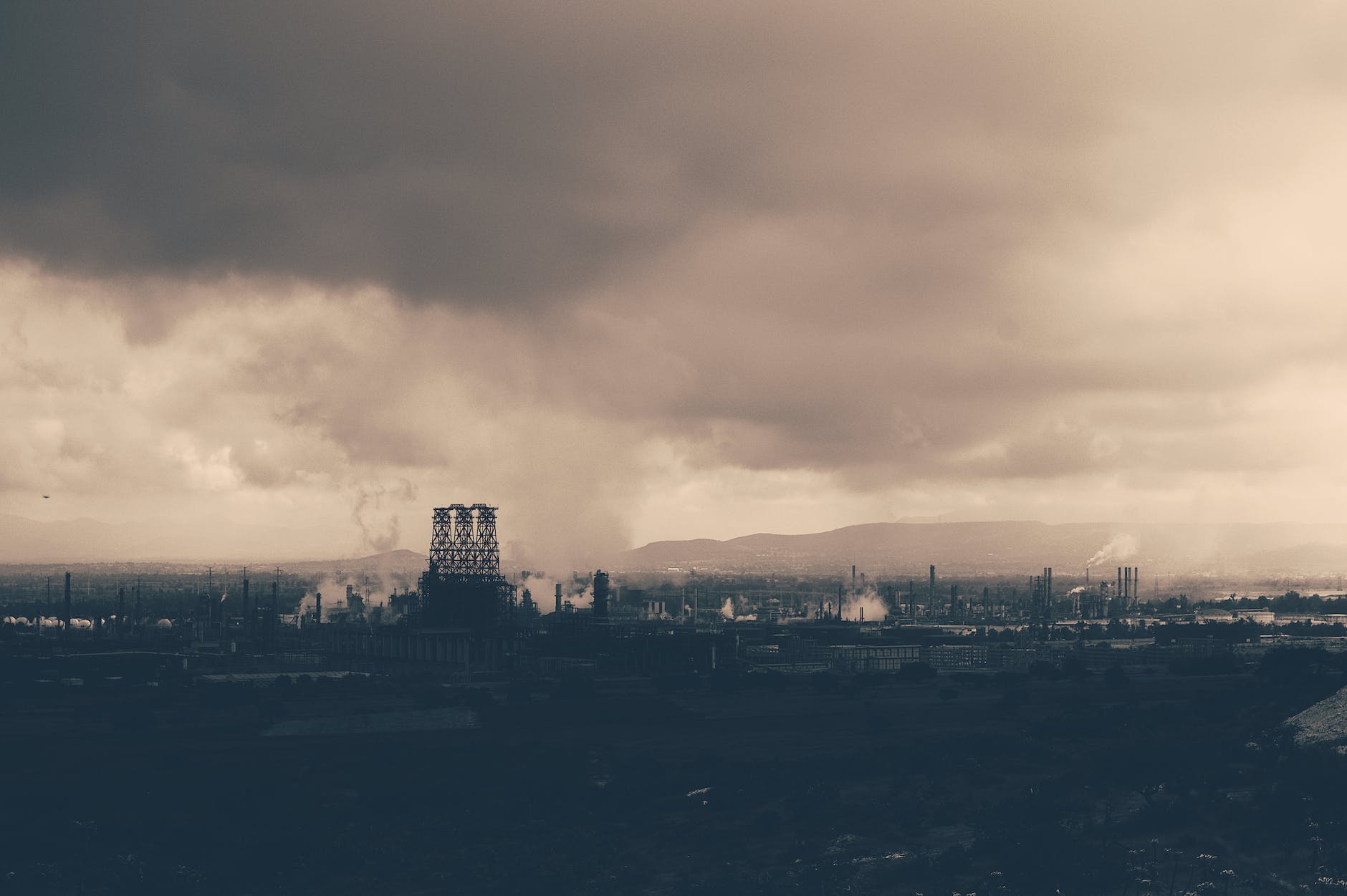
One of the most striking scenes in Beasts of the Southern Wild occurs as six-year-old Hushpuppy and her father Wink look upon an industrial shore lined with petroleum refineries (Beasts 4:03-4:53). This scene splits the landscape into two sections, the glassy water that the two characters rest upon in their boat on the right, and the desolate shore with a dull, gray sky and white clouds billowing from the factories on the left. While Hushpuppy and Wink raise contextual representations of the “other” in terms of environmental (in)justice—their location and situation mirror Louisiana’s “cancer alley” and the “sacrifice zones” that trade in community wellness for the monstrous business of oil—Zeitlin also uses this scene to explore ideas of the subversive and the uncanny (Emmett and Nye 172-173). While watching the shore, Wink expresses his disdain: “Ain’t that ugly over there?” (Beasts 4:26-4:28). His voice, contrasted with the silence of the refineries, subversively frames the industrial waterfront as “other.” Contrary to the cultural narrative that forces residents of the Bathtub as other, here Wink and Hushpuppy see the petroleum industry, rather than themselves, as a strange stranger. Myriad threatening concrete reinforcements hold the land from the water in an uncanny display of repetition, and yet a toxic intimacy remains as factory clouds spill into a shared airspace and pollution leaches into the water (Morton 53). Even more, the characters sit in a boat made from the bed of a gas-fueled pickup truck, a silent protestation that calls attention to barriers between industry and victim and prophesies the relegation of big oil and its products to future relics. This scene shows how strange strangers converge in the Anthropocene and face each other in complex, subversive, and permeable ways that undermine traditional conceptions of the “other,” a term that, as Val Plumwood notes, artificially simplifies relationships to the standard of subjugation (Emmett and Nye 153-154). In this Anthropocene world, strange strangers exist as nodes of connection and subversion rather than distance.
In Beasts of the Southern Wild, however, such strange strangers also lie closer to home for residents of the Bathtub. At the beginning of the film, Hushpuppy watches over a pile of writhing fish, crab, and other seafood, and places a crab up to her ear, listening to its heartbeat (Beasts 6:27-7:00). Zeitlin places this scene within a montage of the Bathtub, set to upbeat music, that represents the Delta community as festive, joyous, independent, alive, and abundant (Beasts 5:00-8:13). This contrasts with a scene later in the film, after a storm hits the Bathtub—a storm that parallels Hurricane Katrina and recalls anthropogenic climate change—and floods the island (Beasts 44:27-46:22). Here, the Anthropocene transforms the sea from kin to killer. The salt water, once so bountiful and giving, strangles vegetation, shown as the camera pauses on uncanny rows of leafless branches that reach into a sallow sky (Beasts 44:33-44:36). Zeitlin also undermines this good-bad dichotomy, however, in two earlier scenes that show glaciers calving into the sea and releasing from the ice an ancient beast known as the aurochs, a testament to long-term climate change (Beasts 29:06-29:11, 9:42-9:58). This contrast, like the Anthropocene itself, displaces humanity’s typical notions of “time and space,” showing that while locally the sea has suddenly transformed into an “other” for residents of the Bathtub, within the span of geological time the ocean has always been a strange stranger, intimate and destructive at once as it freezes and melts, floods and provides (Emmett and Nye 16). With this subversion of time scales, Beasts of the Southern Wild shows how the rapid rate of change in the Anthropocene destabilizes any clear-cut notions of black and white and reorients our ideas of what constitutes good and bad, other and familiar, as the sea ebbs and flows between and among such designations.
This reorientation of the other works most clearly within the film’s focus on animals. The film begins by showing Hushpuppy demonstrating her unique ecological awareness of the nonhuman as she places chickens next to her ear, listening to their fast “hearts…beating and squirting and talking to each other the ways I can’t understand” (Beasts 2:26-2:48). Immediately after this scene, however, we see Wink placing a chicken carcass on the grill (Beasts 3:20-3:24). This highlights a contrast that runs throughout the movie, one that threads together the complexity of otherness: What is an animal in the Anthropocene? Is it food for the grill, or is it a creature with a heart like ours? Are we all just “meat, meat, meat,” as Miss Bathsheba claims, or are we family, operating cannibalistically as a living whole, eating each other up (Beasts 8:14-8:41)? Is the uncanny repetition of heartbeats—shared and separate at once—a sign of life, or a sign of death in this new epoch? Near the end of the film, when Hushpuppy faces the aurochs, now thawed from the ice and roaming freely in the Bathtub, she reaches towards their giant bodies and proclaims that “[y]ou’re my friend, kind of” (Beasts 1:21:21-1:22:43). Her admission—“kind of”—summarizes the convergence of the strange stranger that the Anthropocene engenders. Hushpuppy recognizes that, while the aurochs are uncanny, out of their own time and space, they also exist as a mirror for humanity. She realizes that in the aurochs’ time, when they were “king of the world,” she “wouldn’t even be Hushpuppy. I would just be breakfast” (Beasts 9:42-9:58). In her time, when humanity now rules as “king of the world,” the aurochs is a relic, and in this Hushpuppy sees herself in the beasts as they work both as kin and as an omen for the possibility of human extinction. In this moment, Hushpuppy understands how being a strange stranger in the Anthropocene means overcoming human scale and recognizing oneself as both hunter and hunted, meat and heartbeat.
Beasts of the Southern Wild animates Robert S. Emmett and David E. Nye’s summary of Emmanuel Lévinas’ assertion that “we become ourselves by turning toward the other” (152). In the world of the Bathtub, in the world of the oil refineries, and in the world of Anthropocene, we may transform the hegemonic other into the ecological strange stranger, echoing Donna Haraway’s call to “make kin” (162). This does not mean that hierarchies dissolve—the film also makes crucial points about the unfairness of the Anthropocene that we must work to overcome. However, the film asserts that, using Morton’s term, we all exist as strange strangers, uncanny, subversive, intimate, and distant at once, a notion that may help us understand even more Anthropocene narratives. Beasts of the Southern Wild shows how this epoch highlights our connections and inequalities that, if we take after Hushpuppy, we may recognize “when it all goes quiet,” and in the end we may see that we, too, are “a little piece of a big, big universe” full of strange strangers alike (1:27:02-1:27:11).
Works Cited
Antadze, Nino. “Who is the Other in the age of the Anthropocene? Introducing the Unknown Other in climate justice discourse.” The Anthropocene Review, vol. 6, no. 1-2, pp. 38-54.
Beasts of the Southern Wild. Directed by Benh Zeitlin, performances by Quvenzhané Wallis and Dwight Henry, Fox Searchlight Pictures, 2012.
Crist, Eileen. “On the Poverty of Our Nomenclature.” Environmental Humanities, vol. 3, 2013, pp. 129-147.
Emmett, Robert S., and David E. Nye. The Environmental Humanities: A Critical Introduction, the MIT Press, 2017.
Haraway, Donna. “Anthropocene, Capitalocene, Plantationocene, Chthulucene: Making Kin.” Environmental Humanities, vol. 6, 2015, pp. 159-165.
Morton, Timothy. The Ecological Thought, Harvard UP, 2010.
Rocheleau, Dianne, and Padini Nirmal. “Culture.” Keywords for Environmental Studies, edited by Joni Adamson, et al., New York UP, 2016, pp. 50-55.
Zalasiewicz, Jan, et al. “Anthropocene.” Keywords for Environmental Studies, edited by Joni Adamson, et al., New York UP, 2016, pp. 14-16.
 Kathleen Swain